


Have you ever found yourself in a situation where you had to make an important decision or solve a complex problem? Well, that’s where critical thinking skills come in handy! Critical thinking skills are all about analyzing information objectively and considering different perspectives before making decisions. It helps you to avoid being misled by false information or biased opinions, which can be especially important in today’s world where information is readily available through various sources.
But it’s not just about decision-making and problem-solving. Critical thinking is also essential for innovation and creativity. By thinking outside of the box and considering new ideas, you can come up with innovative solutions to problems and create something truly unique.
So whether you’re facing a big decision or trying to come up with a new idea, critical thinking skills are key. By developing your critical thinking skills, you can improve your overall cognitive function and make more thoughtful, informed decisions that can positively impact your life and the world around you.
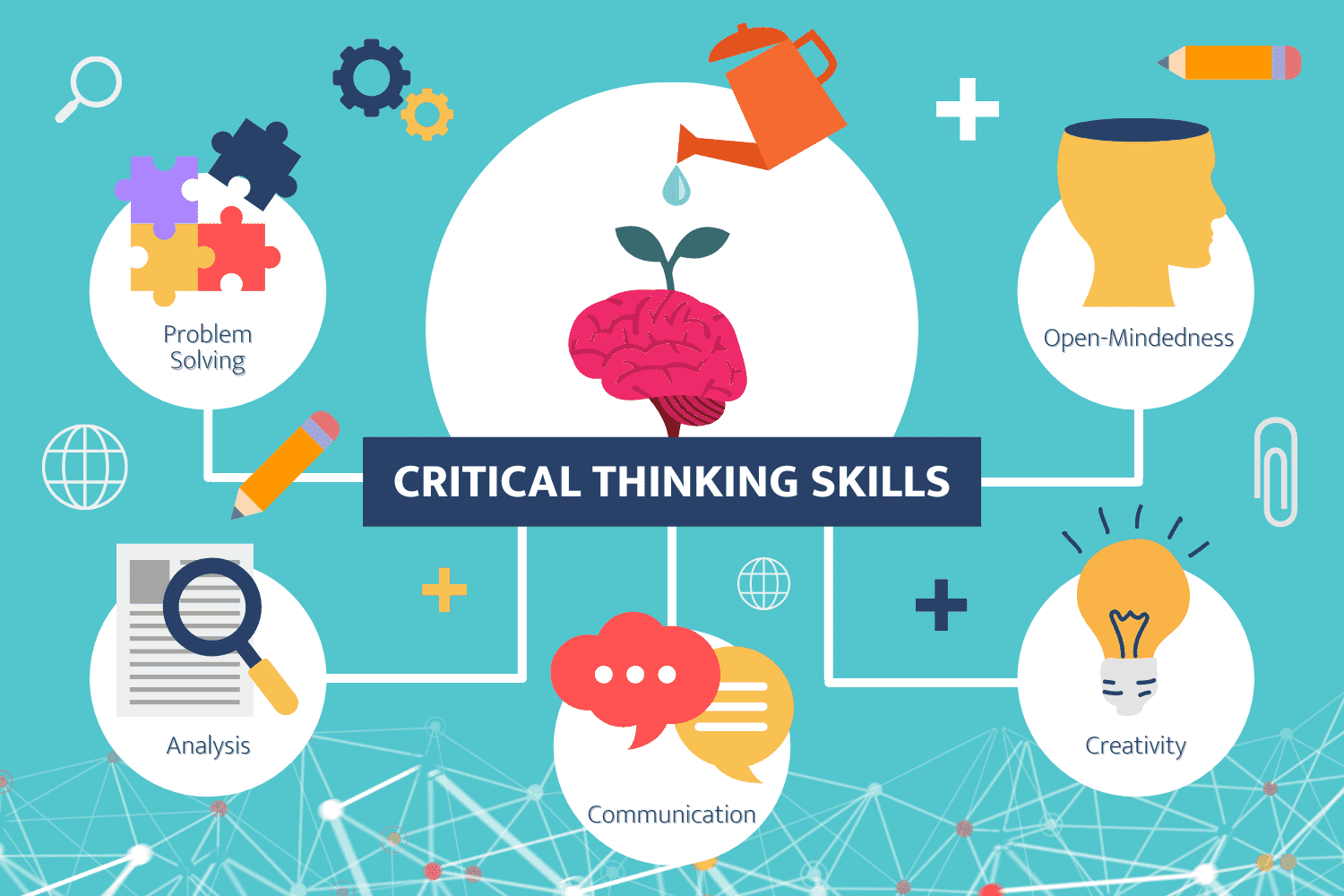
Here are five tricks that we used in our daily Homeschooling routine to help inculcate critical thinking skills. I suggest you give it a try and see if any of these also work for you.
Practice mindfulness to improve critical thinking skills:
Practicing mindfulness can help you to develop your critical thinking skills by increasing your focus and attention. Mindfulness involves being present in the moment and fully engaged with your surroundings.
In our fast-paced lives, where multitasking and constant distractions prevail, taking time to focus on one task at hand becomes increasingly difficult, particularly for kids navigating academic responsibilities. Mindfulness training, however, allows them to cultivate awareness of thoughts, feelings, and sensations without judgment, thereby developing keen observation and attention to detail—two essentials for effective critical thinking.
By honing this innate ability, kids learn to examine situations closely, consider multiple viewpoints, and form judgments guided by logic rather than emotions alone. And as they continue refining their introspective capacities, these young scholars gain self-awareness, self-regulation, and self-motivation—qualities that translate into making informed decisions confidently. Practicing mindfulness needn’t entail elaborate rituals; simple breathing meditations or “pay attention” games suffice, so remember, being present matters immensely in nurturing wise little minds brimming with sharp insights and discernment.
Embrace mindful moments daily and watch your homeschoolers grow into mindful learners too. You can practice mindfulness by taking a few minutes each day to focus on your breath or by engaging in a mindful activity such as yoga or meditation. This can help to sharpen your attention and improve your ability to think critically.
Play strategy games:
Do you want to challenge yourself and train your brain at home? How about playing some fun board games like Risk, Chess, Monopoly, Scrabble, and others which are not just enjoyable but also help boost your intellectual strengths?
Playing these types of games can significantly improve your critical thinking skills by exercising your mind in various ways like tactical planning, analyzing complex information, reasoning, evaluating consequences of actions, creating hypothetical scenarios, problem-solving, understanding human behavior, developing strategic approaches, and more.
Not only will you become better at gaming but also acquire valuable cognitive competencies applicable in other areas of life, such as school studies, career paths, relationship management, financial decision-making, and many others.
Strategy games require good memory retention, quick mental calculations, and concentration to achieve victory, resulting in overall improved mental performance.
Overall, investing in intellectually demanding activities like these games provides long-term benefits for personal development, both entertaining and educational, worth considering adding them to family leisure times.
Engage in debate to test critical thinking skills:
Imagine this – you’re part of a friendly argument over whether pizza should have cheese or pepperoni first. You confidently defend your stance, presenting valid reasons and evidence to back up your choice, meanwhile listening attentively to the opposing side’s viewpoint too. By doing this, you’ve already begun practicing your critical thinking abilities without realizing it!
Engaging in debates requires you to carefully evaluate different perspectives, gather reliable data to support your position, assess the merits of conflicting ideas, identify logical fallacies, communicate persuasively, and consider alternative outcomes. These cognitive processes assist in refining your reasoning skills, expanding knowledge, improving clarity and sharpness when articulating thoughts, honesty and respect during disagreements, plus the ability to objectively analyze complex subjects under pressure.
Debates provide hands-on practice perfecting vital critical thinking attributes useful across numerous aspects of existence like research projects, job interviews, political discourse or even resolving interpersonal disputes amongst friends.
Therefore, entering into lively conversations may serve dual purposes, enjoying intellectual sparring combined with secretly honing crucial intellectual proficiencies simultaneously. Keep arguing with care and passion!
Read widely and wisely:

Reading widely and wisely plays a significant role in improving critical thinking skills in homeschooling children. Engaging them in various genres and age-appropriate literature exposes young minds to different perspectives, diverse topics, and new ways of approaching subjects, ultimately helping them expand their understanding of the world around them.
Additionally, reading critically enables students to identify bias, evaluate arguments, and scrutinize the author’s motives, sources of information, and intended audience.
When parents encourage reading at home, they enable their offspring to become better communicators, more tolerant and open-minded individuals, and competent critical thinkers ready to navigate life successfully.
This skill helps them form independent opinions, distinguish facts from fiction, and discern reliable data from misinformation—all essential traits in today’s information-overloaded society. Thus, I suggest homeschooling parents should make concerted efforts to establish regular reading routines and incorporate a variety of materials to enhance intellectual development across all aspects of learning.
You can read books, articles, and blogs on a wide range of topics that interest you, and try to engage critically with the material. This can help you to develop the ability to analyze information, draw conclusions, and make informed decisions based on available evidence.
Solve puzzles and brain teasers:
Puzzle-solving and brain teasers present an excellent opportunity for homeschooling children to sharpen their problem-solving abilities and develop logical reasoning and critical thinking skills. These types of intellectual exercises challenge young minds to think deeply, analyze information, evaluate alternative strategies, make inferences, and draw conclusions based on available evidence. By engaging in these activities regularly, kids learn to apply analytical approaches to real-world situations and recognize patterns, relationships, and dependencies that might otherwise escape notice.
Furthermore, working towards answers teaches perseverance, resilience, and how to break problems down into manageable components. Encouraging involvement in crossword puzzles, Sudoku, Rubik’s Cube, KenKen, and other fun riddles not only enriches cognitive growth but also boosts confidence in tackling complex ideas and issues with greater ease and proficiency.
Good Read:
- Cohen, M. (2015). Critical Thinking Skills For Dummies. John Wiley & Sons.
- Patki, R. (2023, June 5). Open-Ended Questions – Effective Tool in Homeschooling » The Homeschooling. The Homeschooling. https://www.thehomeschooling.in/open-ended-questions-effective-tool-in-homeschooling/
- Paul, R., & Elder, L. (2019). The Miniature Guide to Critical Thinking Concepts and Tools. Thinker’s Guide Library.
