
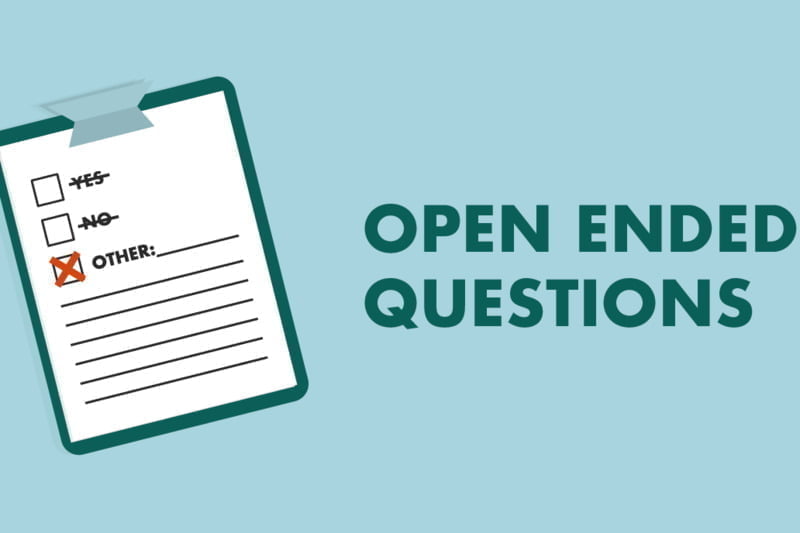

How to phrase Open-Ended Questions? … well this itself is an Open-Ended question! LOL!
Asking open-ended questions can be a bit tricky, but with a little practice, it becomes easier. Here are some tips on how to ask open-ended questions:
Avoid asking yes/no questions:
Yes/no questions don't encourage critical thinking because they only require a one-word answer. Instead, ask questions that require a more thoughtful response. Open-ended questions are those that cannot be answered with a simple "yes" or "no". They require the person to think more deeply and provide a more detailed response.
For instance, instead of asking "Did you have fun at the park?" which can be answered with a simple "yes" or "no", you could ask "What was your favorite part of the park?" This question requires more thought and allows the child to provide a more detailed response.
Start with "What" or "How":
Starting a question with "What" or "How" often leads to open-ended answers. These types of questions encourage the child to think more deeply and provide a detailed response.
For example, instead of asking "Do you like the book you're reading?" you could ask "What do you think about the book you're reading?" This question requires more thought and encourages the child to provide a more detailed response.
Another example could be asking "How did you solve the math problem?" instead of "Did you solve the math problem?" This type of question requires the child to explain their thought process and demonstrate their understanding of the problem.
Don't provide the answer:
Avoid leading questions or questions that provide the answer. Instead, ask questions that encourage exploration and critical thinking. Open-ended questions should allow the child to explore their own ideas and come up with their own answers.
For instance, instead of asking "Is this a good idea?" you could ask "What are some advantages and disadvantages of this idea?" This question allows the child to explore different perspectives and come up with their own answer.
Be curious:
Asking open-ended questions requires curiosity. Show interest in what your child has to say and encourage them to explore their ideas. This will help them to develop a love of learning and a curiosity about the world around them.
For example, you could ask "What did you learn today that surprised you?" This question shows that you are interested in what your child is learning and encourages them to think more deeply about what they have learned.
Be patient:
It can take time for children to think deeply and come up with thoughtful answers. Be patient and give them time to think and respond. Encourage them to think about the question and give them space to provide a thoughtful response.
For instance, you could ask "What do you think we can do to help the environment?" and give your child time to think and respond. This question requires some thought, so give your child enough time to come up with a thoughtful answer.
Overall, open-ended questions are an effective way to promote critical thinking skills in children. By asking questions that encourage independent thinking, develop analytical skills, promote discussion and debate, and encourage exploration, you can help your child to think more deeply and critically about the world around them.
Here are some examples of open-ended questions:
- What do you think would happen if…?
- How do you feel about…?
- What are some possible solutions to…?
- What could be another way to…?
- How might you approach…?
Remember, asking open-ended questions is a great way to promote critical thinking skills in your child. By encouraging independent thinking, developing analytical skills, promoting discussion and debate, and encouraging exploration, you can help your child to become a lifelong learner.
