

What is Unschooling?
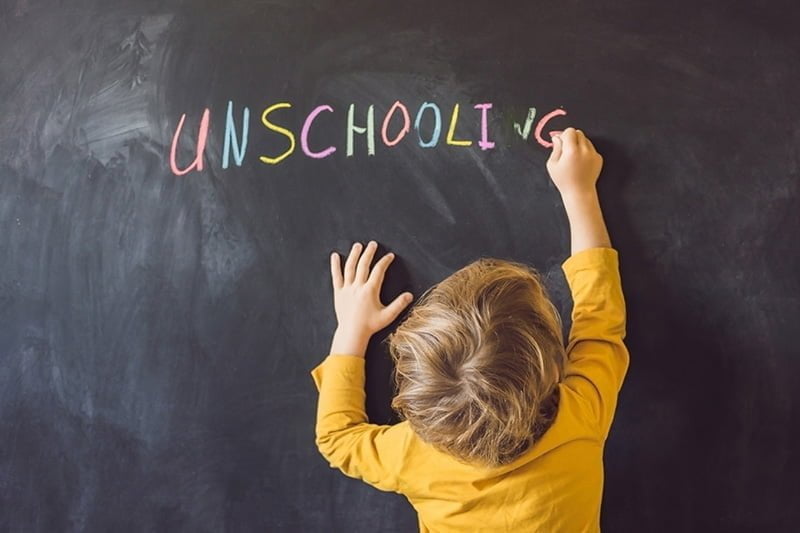
Unschooling is a form of homeschooling that emphasizes self-directed learning and allows children to take control of their own education. It is based on the idea that children are naturally curious and will learn best when they are allowed to follow their own interests and passions. In unschooling, there is no set curriculum or schedule, and learning happens through real-life experiences and activities rather than through traditional classroom instruction.
Unschooling is rooted in the belief that children are capable of directing their own learning and that they will be more motivated to learn when they are interested in the subject matter. It allows children to learn at their own pace, in a way that is meaningful to them, rather than following a rigid curriculum or schedule. This approach is often seen as more child-centered, as it puts the child’s interests and needs at the forefront of their education. It also promotes critical thinking, problem-solving, and self-motivation skills in children.
However, unschooling is not for everyone, and it may not be suitable for children who need a more structured and traditional educational experience. It also requires a significant amount of trust and support from the parents, as well as a willingness to let go of traditional notions of what education should look like. It’s important to note that unschooling is not a lack of education, but rather a different approach to education. Parents should also be aware of the state’s laws and regulations regarding homeschooling and unschooling, as they may have different requirements.
Challenges in Unschooling
Unschooling can be a challenging approach to education, and it requires a significant amount of trust and support from the parents, as well as a willingness to let go of traditional notions of what education should look like. Some of the challenges of unschooling include:
- Lack of structure: Without a set curriculum or schedule, it can be difficult for both parents and children to know what to expect and to stay on track. It can also be challenging for parents to ensure that their child is getting a well-rounded education that covers all the essential subjects.
- Difficulty in measuring progress: Without traditional methods of assessment such as tests and homework, it can be difficult for parents to know how their child is progressing and to determine if they are meeting their educational goals.
- Limited resources: Unschooling can be more resource-intensive than traditional homeschooling as it requires parents to actively seek out learning opportunities for their child. This may require more time and effort on the part of the parents.
- Lack of support: Unschooling can be a controversial approach to education, and parents may find that they do not have the same level of support from family, friends, or the community as they would with traditional homeschooling.
- Financial burden: Unschooling may require more financial resources as parents may need to provide more opportunities for their child’s learning, such as trips, classes, and other activities.
Words of Caution
It’s important to keep in mind that unschooling is not for everyone, and it may not be suitable for children who need a more structured and traditional educational experience. Parents should carefully consider their child’s individual needs and abilities, as well as their own resources and abilities, before deciding whether unschooling is the best approach for their family.
Are Unschooling and Homeschooling the same?
The main difference between unschooling and homeschooling is the approach to education.
Homeschooling is an educational alternative where parents take primary responsibility for their child’s education, and it can be done by following a traditional curriculum, creating their own curriculum, or using a pre-designed curriculum. While unschooling is a specific approach to homeschooling where the child is given the freedom to explore and learn on their own, with less emphasis on the traditional curriculum.
In unschooling, the focus is on the child’s interests and passions, rather than on a set curriculum. Children are free to learn in their own way, at their own pace, and in a way that is meaningful to them. This approach emphasizes self-directed learning and encourages children to take ownership of their own education.
On the other hand, in homeschooling, the parents are in charge of their child’s education and they decide what and how their child should learn. The curriculum and learning objectives are planned and set out by the parent in order to achieve a specific educational outcome.
